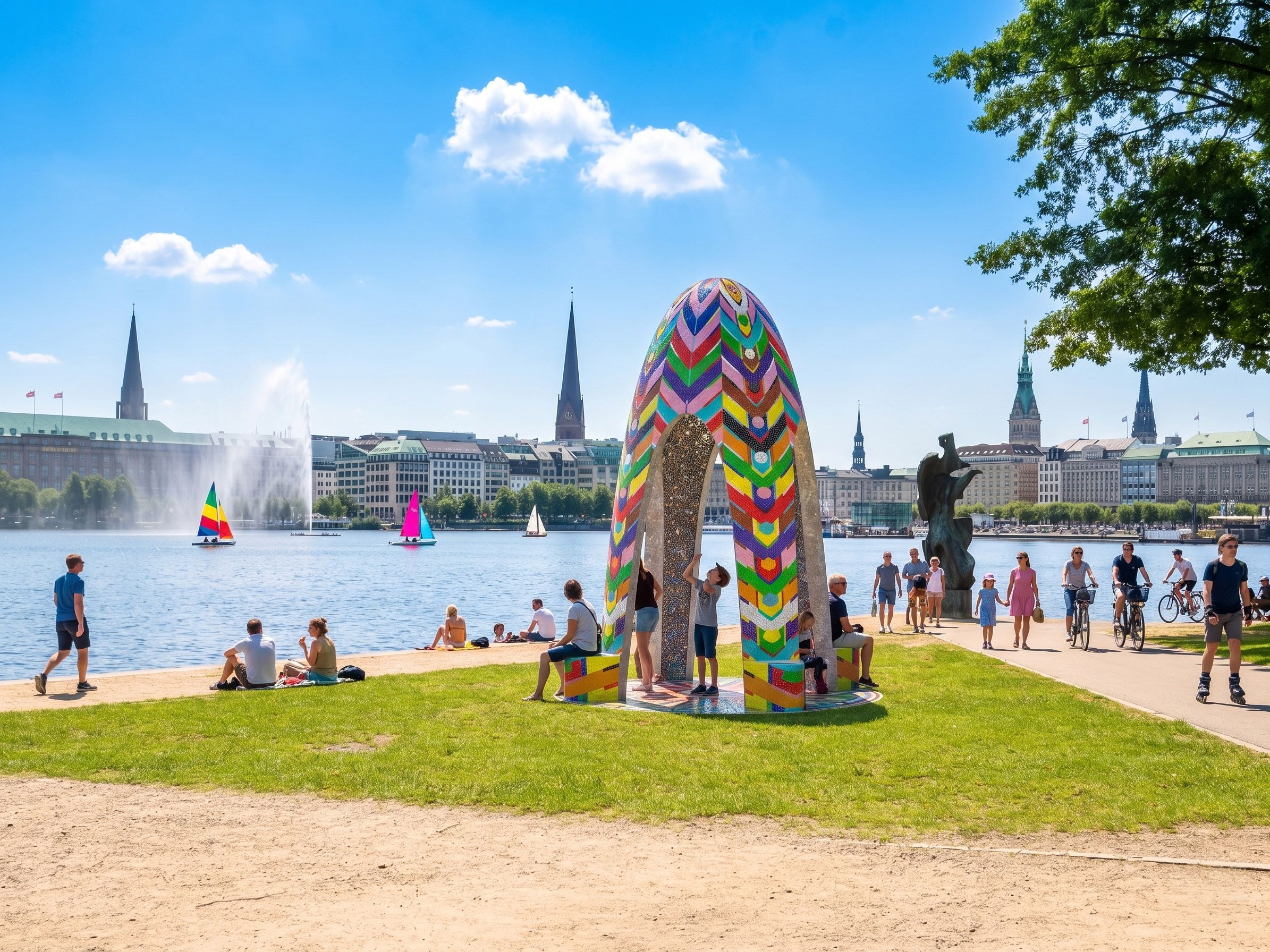
Embedded in a city centre park, "To Be Everything We Can Be" was a collaboration with Transit Architektinnen for a proposal to memorialize Gay and Queer history in Hamburg. The project went through to the second stage of the competition, which was won by Olafur Eliasson.
................
"There’s a line from a Pet Shop Boys track that’s been
looping around my head lately. It’s from ‘Being Boring’,
that strange, elegiac pop song to those lost to AIDS.
‘I never dreamt,’ Neil Tennant sings in his confiding,
reticent way, ‘that I would get to be / the creature
that I always meant to be.’ There’s something central
to queer identity encapsulated in this statement: the
idea of a hidden self, a mysterious creature that can
emerge from its chrysalis, given the right conditions."
Olivia Laing, foreword to Queer Spaces
As Laing points out above so eloquently, queer identity is very often suppressed in a myriad of ways, and it is a relatively rare (historically incredibly rare) and beautiful thing when individuals and communities are able to fully realise and express their identity in the full daylight of public life. It is much harder to do this, to come to know oneself, to be at ease with one’s identity and desires, if there is little in one’s surroundings that reflects one’s existence. The annual Pride parade is a wonderful marker of communal strength, but there is scant physical presence in our cities for the rest of the year that affirms the beauty, existence, history and resilience of the LGBTQIA+ community.
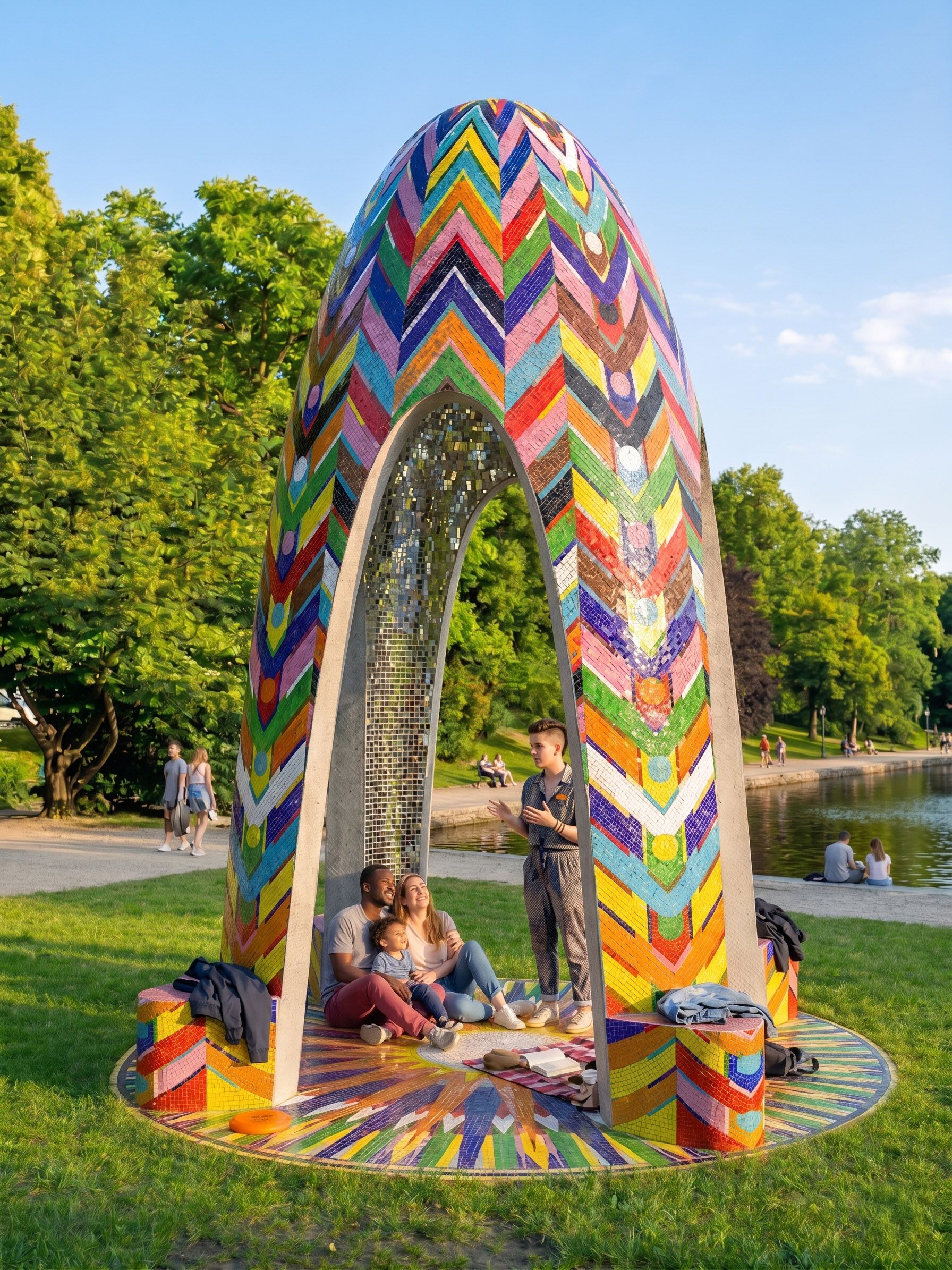
“To Be Everything We Can Be” is a resolutely proud statement of existence and co-existence, distinctness as well as harmony, in the heart of the communal spaces of Hamburg. It is a magical vessel that celebrates the flowering of queer identities, as well as being a welcoming, gorgeously crafted place to sit, linger and enjoy the view and the park for everyone.
It is an embodiment of queer history, strength, struggle and beauty in an aesthetic form that is accessible, enjoyable, and comprehensible to all visitors, without the need for complex explanations.
The monument has four main elements that come together in a simple and recognisable form of shelter and memorialisation in a park setting:
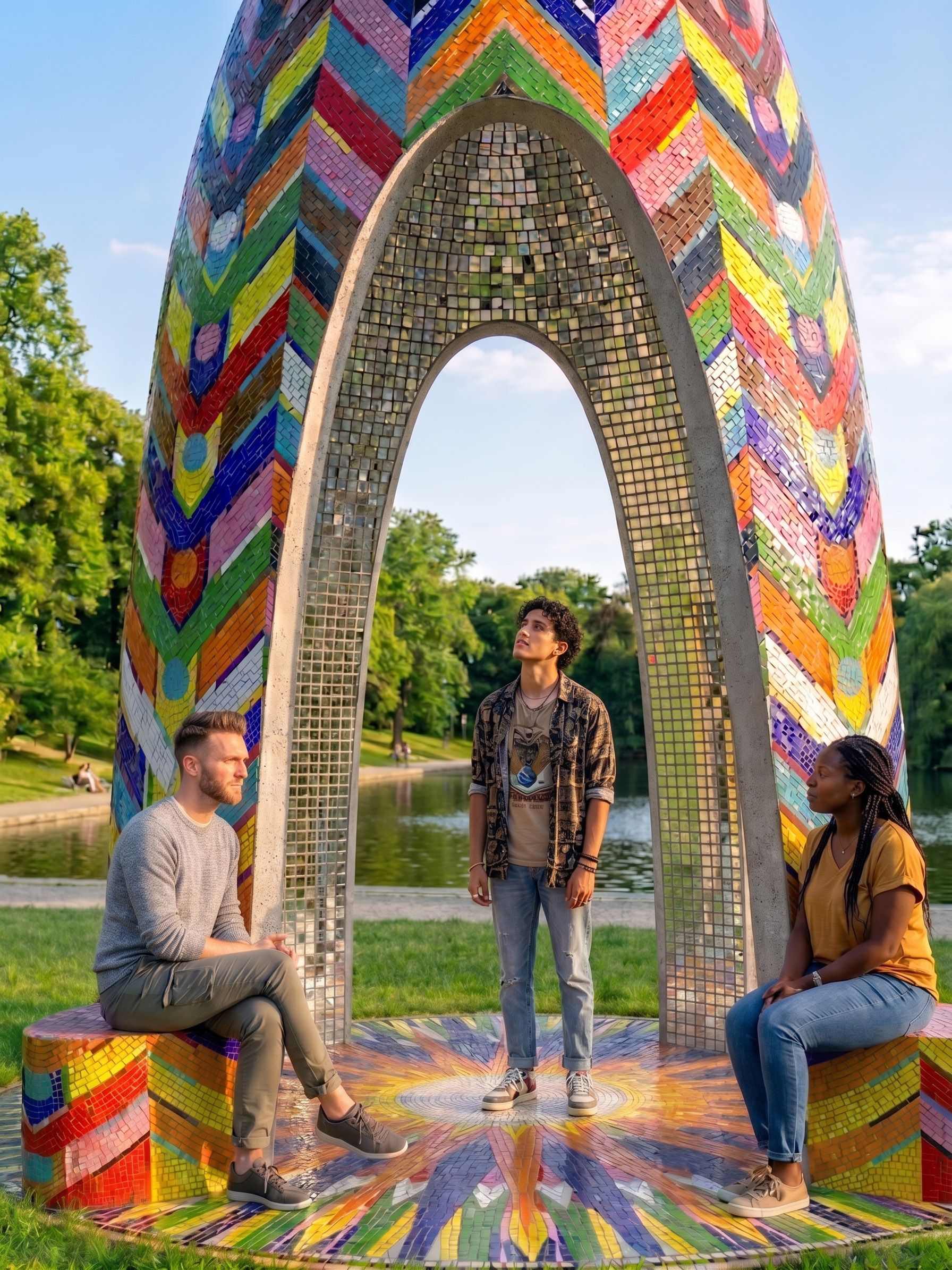
-exterior mosaics that are a complex pattern made out of the colours of the Progress Pride flag. The mosaics will be bold and bright, but will also be textured, varied and full of life and have a handmade quality that will make it profoundly tactile and varied in different lights throughout the year. This speaks of pride, vivacity, confidence and beauty of queerness, this is our outward presentation to the world.
-interior mirror mosaic that will turn the inside of the monument into a dazzling cave of reflections in which glimpses of each visitor looking at them will mingle with fragments of the surroundings reflected back at them. This speaks of the deep introspection and reflection on identity that necessarily comes with being queer, the idea that -in so many ways- we have to build ourselves up and reaffirm ‘who we actually are’ against a world that is so contrary. We piece ourselves together and celebrate complexity, and this space reminds us of that journey towards self-realisation, whilst simultaneously being as celebratory as a disco ball.
-seating and flags… seats are incorporated into the monument so that it is a functional part of the park at all times, and everyone can enjoy its materiality and position, and there are a series of support holes around it, so that when the LGBT community have a parade or a ceremony, they can include the monument as part of the ceremony by planting flags that they carry with them during the parade, and deposit around the monument, transforming it into a fluttering collection of flags and fabrics that interact with the mosaics and the people gathered around it for the marking a moment of communal memorialisation and celebration.
-the floor is also a crafted and tactile mosaic that radiates out from the centre directly under the middle of the monument’s dome. As one looks down, at the heart of the space is a short and moving message which speaks to the past, present and future of the LGBTQIA+ community. It is a message of sombre thoughtfulness, which acknowledges pain and struggle, but which is also profoundly hopeful and uplifting. I have suggested that this be the following text by Olivia Laing form their book “Everybody”, however we would be open to this being a text chosen by the community as well.
“Imagine, for a minute
What it would be like
To Inhabit a body without fear
Without the need for fear.
Just Imagine
What we could do
Just imagine the world that we
Could build”
And upon reading this, visitors will look out at the skyline of Hamburg, and some will be filled with a beautiful belief in the future and its possibilities.